
Ever wondered how environmental regulations truly play out, not in abstract policy debates, but in the gritty reality of local governance? Having navigated the labyrinthine corridors of public administration myself, I’ve seen firsthand how incredibly complex it is to translate sweeping environmental mandates into actionable, enforceable policies that impact our daily lives.
From my perspective, the current landscape is more dynamic than ever. With the relentless urgency of climate change, the increasing demand for sustainable practices, and the push for a circular economy, public administrators are scrambling.
They’re not just enforcing old rules; they’re constantly re-evaluating outdated frameworks, wrestling with the integration of cutting-edge technologies for real-time environmental monitoring, and navigating the ever-shifting tides of public expectation and corporate responsibility.
It’s a delicate balancing act, often fraught with competing interests and economic pressures, shaping everything from our local recycling programs to the sprawling infrastructure projects that define our communities.
The future demands agility and foresight from our public servants, as global trends continue to redefine what ‘clean’ and ‘sustainable’ truly mean.
Let’s explore this further.
The Unseen Hurdles of Local Enforcement
Okay, so on paper, an environmental regulation looks clean, concise, and utterly logical, right? But out in the field, where the rubber meets the road, it’s an entirely different story. I remember working on a project to reduce storm water runoff in a rapidly developing suburban area. The federal guidelines were crystal clear on permeable surfaces and retention ponds, but the local council was battling fierce opposition from developers citing ‘economic feasibility’ and residents worried about ‘property value aesthetics.’ It wasn’t just about understanding the regulation; it was about navigating a minefield of local politics, entrenched interests, and deeply personal anxieties. Every single permit application became a negotiation, a test of patience, and frankly, a masterclass in compromise. This isn’t theoretical; this is the messy, human reality of local governance.
1. Bridging the Gap: Policy to Practice
One of the biggest headaches, in my experience, is the sheer chasm between what policy makers envision in a climate-controlled office in Washington D.C. or a state capital, and what can actually be implemented in a small town. The specific topographical challenges, the existing infrastructure (or lack thereof), the local economic base – all these unique factors often get overlooked in broad-stroke legislation. I’ve seen incredibly well-intentioned mandates stumble and fall because they didn’t account for the granular realities on the ground. It requires a lot of on-the-spot innovation and a deep understanding of community dynamics to make things work. We had to literally redesign some proposed solutions multiple times just to fit the existing water table and soil composition, which federal guidelines couldn’t possibly account for in detail.
2. The Battle for Resources: Funding and Staffing Shortages
And let’s not even start on resources. You can have the most brilliant environmental policy in the world, but if you don’t have the budget to hire enough inspectors, buy the right monitoring equipment, or even fund public awareness campaigns, it’s effectively dead on arrival. I remember a particularly frustrating budget cycle where we had to choose between maintaining essential air quality sensors and funding a much-needed public education initiative on recycling contamination. It felt like constantly having to pick between two critical limbs. Local governments, especially smaller ones, are perpetually strapped for cash and qualified personnel. This isn’t just about wanting more; it’s about having the fundamental tools to do the job properly and protect our communities. It truly grinds you down when you know what needs to be done, but the financial levers simply aren’t there.
Embracing Technological Innovation for Compliance
When I first started in public service, environmental monitoring often involved manual sampling, lab tests that took weeks, and a lot of paperwork. It was like trying to steer a massive ship with a tiny paddle. But fast forward to today, and the landscape has completely transformed thanks to technology. We’re talking about real-time sensors, drone imagery, satellite data, and AI-powered analytics. I’ve personally been involved in pilot programs that use IoT sensors to monitor air quality around industrial sites, providing immediate alerts if pollutant levels spike. It’s game-changing because it allows for proactive intervention rather than reactive cleanup, which is always far more damaging and expensive. This isn’t just about efficiency; it’s about fundamentally changing how we protect our environment, making enforcement smarter and more responsive.
1. Real-time Monitoring and Data Analytics
The ability to collect and analyze environmental data in real-time is, for me, one of the most exciting advancements. Imagine having a network of sensors detecting abnormal discharge into a river or unexpected emissions from a factory and instantly flagging it. This immediate feedback loop allows administrators to dispatch teams, issue warnings, or even halt operations before significant damage occurs. It’s a far cry from the old days of relying on periodic inspections and hoping for the best. I’ve seen this in action, where a sudden increase in a specific chemical in a local watershed was detected within minutes, allowing us to trace the source to an unexpected leak and prevent a major ecological disaster. It’s a testament to how much more effective we can be with timely, accurate data.
2. Geographic Information Systems (GIS) for Planning and Oversight
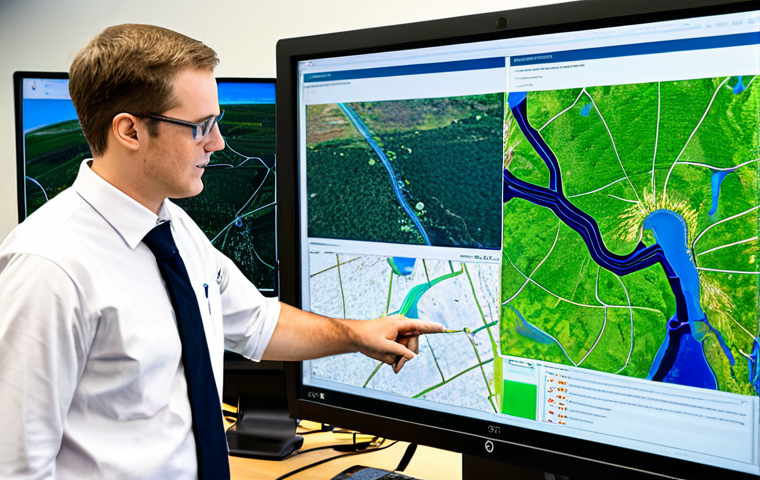
GIS has become an indispensable tool in my line of work. It allows us to visualize complex environmental data – everything from wetland boundaries and flood plains to pollution hotspots and endangered species habitats – on interactive maps. This spatial understanding is critical for informed decision-making. When a new development is proposed, for instance, we can layer environmental overlays onto the plans and immediately identify potential conflicts or areas that require special protection. It makes environmental impact assessments so much more robust and transparent. I’ve used GIS countless times to demonstrate to developers exactly where the sensitive ecosystems are, or to show residents the potential spread of a pollutant. It helps cut through arguments with objective, visual evidence that speaks volumes.
Navigating Public Expectations and Corporate Responsibility
One of the trickiest parts of my job has always been balancing the often-conflicting demands of the public and corporations. On one hand, you have residents passionately advocating for pristine natural spaces, demanding stricter regulations, and expecting immediate action on environmental issues. On the other, you have businesses, vital to the local economy, grappling with compliance costs, seeking flexibility, and sometimes pushing back against what they perceive as excessive burdens. I’ve been in countless town hall meetings where emotions ran high, and finding common ground felt impossible. It’s a delicate dance, trying to enforce regulations fairly while also fostering economic growth and maintaining community harmony. You quickly learn that public administration isn’t just about rules; it’s about people and their deeply held values and livelihoods.
1. The Pressure from Community Activism
Public awareness and activism have become powerful forces. I’ve witnessed how quickly a local environmental concern can snowball into a major public outcry, fueled by social media and grassroots organizing. This puts immense pressure on local administrators to respond, often with limited resources or existing legal frameworks. While challenging, this community engagement is also incredibly vital. It keeps us accountable and reminds us why these regulations exist in the first place – to protect the health and well-being of our citizens and our shared environment. I remember a particularly intense campaign against a proposed landfill expansion. The sheer volume of public comments, many heartfelt and well-researched, genuinely influenced the final decision and led to a much more stringent set of conditions, which was a win for the community.
2. Incentivizing Corporate Compliance and Sustainability
It’s not just about penalties; it’s also about positive reinforcement. While enforcement is crucial, I’ve found that working collaboratively with businesses to help them achieve compliance and even go beyond minimum standards can yield far better long-term results. This often involves offering guidance on sustainable practices, highlighting available grants for green technologies, or even public recognition programs. When I worked on a waste reduction initiative, we found that simply providing free waste audits and connecting businesses with recycling solutions led to significantly higher adoption rates than just threatening fines. Companies often *want* to do the right thing, but they need practical pathways and sometimes a little push or incentive. It shifts the dynamic from adversarial to partnership, which is ultimately more effective for widespread environmental improvement.
| Key Challenge | Impact on Local Governance | Effective Mitigation Strategies |
|---|---|---|
| Resource Scarcity (Funding & Staff) | Slowed enforcement, limited monitoring, reduced public outreach. |
|
| Political Pressure & Special Interests | Compromised enforcement, policy stagnation, public mistrust. |
|
| Technological Adoption Gap | Inefficient monitoring, delayed response, missed opportunities for prevention. |
|
From Abstract Policy to Tangible Local Impact
It’s easy to get lost in the jargon of environmental policy – carbon footprints, biodiversity offsets, circular economy principles. But what truly matters, what always resonated with me, is how these grand ideas trickle down to affect real people and places. Think about your local park, the water you drink, the air you breathe – these are direct results of environmental regulations enforced at the local level. I remember seeing a polluted stream, once a vibrant fishing spot in my hometown, slowly come back to life after years of dedicated local enforcement and community clean-up efforts following new industrial discharge limits. It wasn’t just a policy; it was the restoration of a memory, a habitat, a piece of our shared heritage. That’s the tangible, often invisible, impact of local governance on our environment.
1. Protecting Public Health Through Local Action
Beyond the broader ecological concerns, the most immediate and visceral impact of local environmental regulations is on public health. Ensuring clean drinking water, managing hazardous waste, regulating air pollutants from local sources – these are daily responsibilities that directly prevent illnesses and improve quality of life. I’ve seen the health impacts in communities living near non-compliant facilities, and it’s heart-wrenching. Conversely, I’ve been part of projects where persistent enforcement led to significant reductions in respiratory illnesses in neighborhoods near industrial zones. It’s a constant reminder that these aren’t just abstract rules; they’re about safeguarding the very well-being of our neighbors, our children, and ourselves. This is where the emotional investment really comes in for those of us on the front lines.
2. Fostering Economic Resiliency Through Green Initiatives
Some might argue that environmental regulations stifle economic growth, but my experience tells a different story. I’ve seen countless local economies actually *thrive* by embracing green initiatives. Think about towns that have invested in renewable energy infrastructure, attracted eco-tourism, or developed robust recycling and composting programs that create local jobs. When we incentivize businesses to adopt sustainable practices, it often leads to innovation, efficiency gains, and a stronger, more resilient local economy. I helped a small city develop a “green business certification” program that not only reduced the environmental impact of local enterprises but also became a significant marketing advantage, attracting environmentally conscious consumers and creating a positive feedback loop for the entire community. It was a win-win, proving that economic prosperity and environmental stewardship can absolutely go hand-in-hand.
Building Capacity and Collaboration for a Sustainable Future
No single government agency, no matter how dedicated, can tackle the monumental environmental challenges we face alone. I’ve learned that the secret sauce to effective local environmental governance is collaboration – reaching out to state and federal partners, engaging non-profits, working with academic institutions, and most importantly, empowering community members. It’s about building a collective capacity, sharing knowledge, and leveraging diverse expertise to create more comprehensive and resilient solutions. I’ve witnessed the power of multi-agency task forces tackling complex regional pollution issues and seen how much more effective we were when everyone, from the local water authority to the state environmental protection agency, was at the table sharing insights and resources. It’s truly inspiring to see what can be achieved when silos are broken down.
1. Inter-Agency and Cross-Jurisdictional Partnerships
Environmental problems don’t respect municipal boundaries, and neither should our solutions. Pollution from one town can impact the water quality in another, and a regional air shed requires a coordinated approach. I’ve been involved in numerous multi-jurisdictional agreements, from watershed management plans involving dozens of towns to regional recycling initiatives. These partnerships, while often challenging to coordinate due to differing priorities and regulations, are absolutely essential for addressing systemic environmental issues. They allow for shared resources, consistent enforcement, and a much broader perspective on problem-solving. It’s like trying to clean up a spill: you can’t just clean your backyard; you have to work with your neighbors downstream.
2. Empowering Citizens and Local Stakeholders
Ultimately, a sustainable future hinges on the active participation of every citizen and stakeholder. Local administrators aren’t just enforcers; we’re also educators and facilitators. Engaging the public in meaningful ways – through citizen science initiatives, public forums, volunteer programs for cleanups, and educational campaigns – fosters a sense of shared responsibility and builds environmental literacy. I’ve personally seen how a small group of passionate local residents, once educated on the nuances of a particular environmental issue, became powerful advocates and even volunteers, helping us identify illegal dumping or monitor local wildlife. This isn’t just about compliance; it’s about cultivating a culture of stewardship within the community, where environmental protection becomes a collective endeavor, not just a government mandate. It truly warms my heart to see that level of community engagement.
Wrapping Up
Reflecting on my years in this field, it’s abundantly clear that environmental governance at the local level is far from a simple bureaucratic task. It’s a dynamic, intricate dance between policy, people, and the planet itself. We’ve explored the gritty realities – the resource battles, the political pressures, and the incredible potential of technology – but at its heart, it’s always been about protecting our shared environment for future generations. It’s a challenging journey, yes, but seeing a community thrive because of dedicated, thoughtful enforcement truly makes every hurdle worth it. This work isn’t just a job; it’s a profound commitment to our collective future.
Useful Insights for Environmental Governance
1. Community Engagement is Paramount: Never underestimate the power of informed and engaged citizens. They are your eyes and ears on the ground and vital advocates for environmental protection.
2. Invest in Continuous Learning: The environmental landscape is constantly evolving, with new technologies and regulations. Staying current is key for effective enforcement and proactive problem-solving.
3. Seek Out Diverse Funding: Local budgets are often tight. Actively pursue federal grants, state programs, and private foundation funding to bolster your environmental initiatives.
4. Embrace Cross-Sector Collaboration: Work with businesses, non-profits, academia, and other government agencies. Complex problems require comprehensive solutions that no single entity can provide alone.
5. Prioritize Prevention: While remediation is necessary, focusing on preventing environmental harm through smart planning and early intervention is always more effective and less costly in the long run.
Key Takeaways
Local environmental governance faces significant challenges, from resource limitations and political pressures to the complexities of real-world implementation. However, by embracing technological innovation, fostering strong community and corporate partnerships, and prioritizing collaborative solutions, local administrators can make a profound, tangible impact on public health and economic resiliency. It’s a demanding but deeply rewarding endeavor that directly shapes the well-being of our communities and the health of our planet.
Frequently Asked Questions (FAQ) 📖
Q: What’s the single most frustrating aspect you’ve encountered when trying to get these environmental policies off the drawing board and into tangible action at the local level?
A: You know, it’s rarely about the science or even the intent. Everyone, more or less, agrees we need clean air and water. What really grinds my gears, what makes my head pound sometimes, is the sheer, messy human element: the budget fights that make a sensible program look like a luxury, the political football that good ideas become during election cycles, or the competing interests of a local business fighting tooth and nail against a regulation a community group desperately wants to preserve green space.
I’ve seen perfectly crafted regulations, brilliant on paper, wither on the vine because of a lack of consistent funding or, honestly, just the sheer political will to enforce them evenly across the board.
It’s truly heartbreaking when you see the potential for positive change and then the crushing reality of inertia and competing priorities.
Q: With all this talk about “cutting-edge technologies” for environmental monitoring and management, how much of a game-changer are they really in the everyday grind of local environmental governance?
A: Look, technology is incredible, don’t get me wrong. Real-time air quality sensors, AI-driven waste sorting systems, drone-based land surveys – they’re not just buzzwords.
They offer a window into our environment we never had before. But from my time in the trenches, it’s rarely plug-and-play. I’ve been in countless meetings where we’ve practically salivated over a new, sleek platform promising unparalleled insights, only to then come crashing back to Earth.
The reality often hits hard: our existing, clunky legacy infrastructure couldn’t support it, or we didn’t have the staff trained to even interpret the complex data these systems spit out.
It’s a huge investment, not just in dollars, but in completely retraining staff and recalibrating entire departmental mindsets. When it works, truly integrates, it’s revolutionary, absolutely.
But the journey to get there is often paved with unforeseen technical glitches, frustrating compatibility issues, and more than a few bureaucratic headaches.
Q: In this complex web of regulations and administration, where do ordinary citizens and local communities actually fit in? Do they truly have a voice, or are they often just recipients of policy?
A: Oh, they absolutely have a voice, sometimes to a deafening degree! It’s never a one-way street, not even close. I’ve witnessed local advocacy groups, fueled by nothing more than passion and a shared vision for their neighborhood, completely shift the needle on everything from park clean-ups to major zoning decisions that impact environmental footprints.
Their energy can be infectious, pushing hesitant administrators to act. Conversely, I’ve also seen perfectly well-intentioned proposals get completely bogged down by genuine, but sometimes misinformed, public concern or plain old NIMBYism – “Not In My Backyard.” The real trick for administrators, the truly effective ones I’ve had the pleasure to work with, is to bridge that gap.
It’s about genuinely listening, educating, and empowering communities to be active partners, rather than just informing them of what’s coming. When citizens are truly engaged, not just as recipients but as active contributors to the solutions, that’s when real, lasting change happens.
It’s messy, it’s loud, sometimes frustratingly slow, but it’s absolutely essential.
📚 References
Wikipedia Encyclopedia
구글 검색 결과
구글 검색 결과
구글 검색 결과
구글 검색 결과
구글 검색 결과